
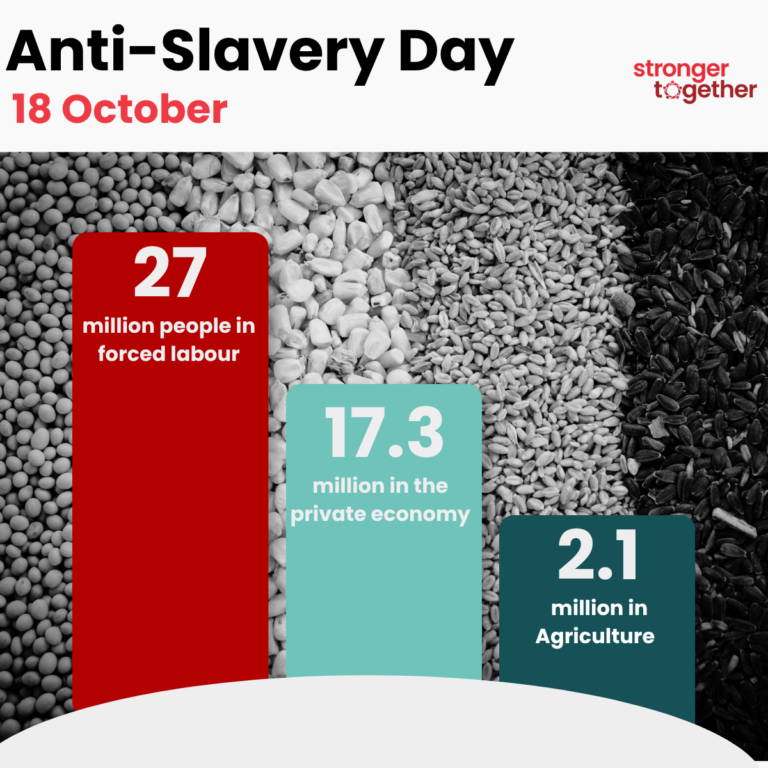
Every year on 18th October, the UK marks Anti-Slavery Day. Established in 2010, this observance day aims to raise awareness about the prevalence of modern slavery both in the UK and around the world.
According to the Home Office’s statistics for 2025-26, over 25,000 people were referred to the Home Office as potential victims of modern slavery. This number has continued to rise year on year and again represents the highest number since records began. But evidence suggests the true figure is likely much higher, with the Global Slavery Index estimating it may be closer to 120,000 people.
How does FNET support its members to tackle slavery?
Established in 2016 to improve human rights in global food supply chains, FNET works with members to improve understanding of human rights risks. This includes labour exploitation and modern slavery. For many members, membership of FNET forms a core part of their human rights due diligence, contributing to their efforts to prevent exploitation.
Over the past year, FNET has supported and worked directly with members to heighten their capabilities in tackling modern slavery. Through our fortnightly calls and weekly news, FNET has shared core resources with members and invited modern slavery experts such as Unseen to present on the latest Modern Slavery Helpline data. Via the work of the Responsible Recruitment working group, members have heard directly from expert organisations such as Stronger Together about the evolving trends of modern slavery in the UK and worked together, co-creating practical tools and case studies.
This year, Stronger Together has chosen the theme #SeeEveryWorker to mark Anti-Slavery Day. We know that engaging with workers in a comprehensive and meaningful way is an integral way to spot the signs of exploitation. This has been a big focus for FNET this year, as we co-launched practical guidance on Meaningful Stakeholder Engagement, which was primarily written by Oxfam, and co-developed and co-financed by AIM-Progress, amfori, Ethical Trading Initiative, Ethical Trade Sweden, Fair Labor Association. And just last week, FNET’s Responsible Recruitment working group hosted an in-person meeting focused on engaging workers throughout the recruitment process.
How FNET Members are Addressing Modern Slavery
FNET member Sainsbury’s topped the latest CCLA’s modern slavery benchmark
Late in 2025, Sainsbury’s was named as the highest-scoring company in the CCLA’s 2025 Modern Slavery Benchmark. Assessing the largest companies in the UK on the steps they have taken to tackle modern slavery throughout their operations and supply chains, the Benchmark outlines both the positive work that companies have done and the areas for improvement. Scoring the highest on the Benchmark is a significant achievement.
“Sainsbury’s achievement in 2025’s edition reflects our ongoing work across different functions in our business, and with our suppliers and civil society partners, to protect workers across our supply chains and to drive meaningful change where it matters most.”
Sainsbury’s highlights that its work to eradicate modern slavery involves having “robust policies and transparency”, “supplier engagement and training”, “collaborative partnerships” and “continuous improvement.”
Find out more in Sainsbury’s most recent modern slavery statement here.
Attending the Modern Slavery Intelligence Network Conference
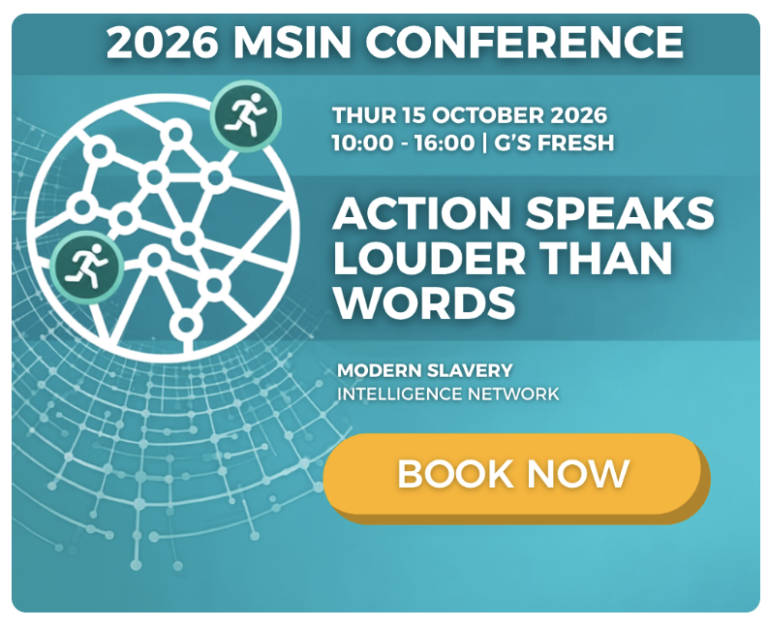
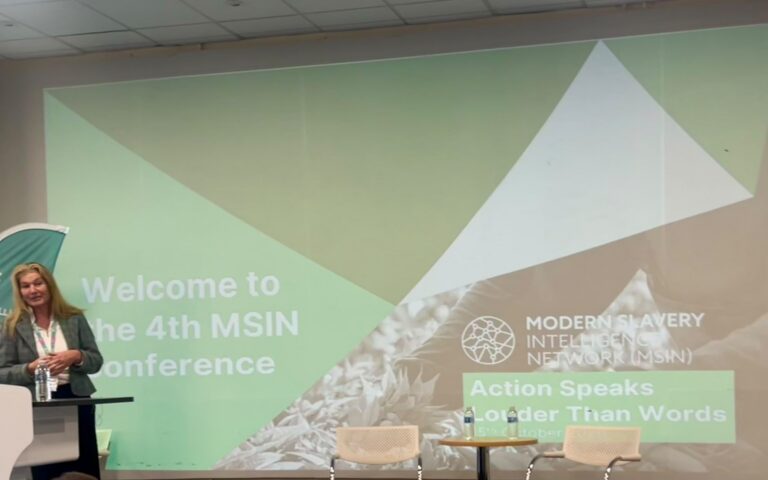
Many FNET members are also members of the Modern Slavery Intelligence Network. This year, our Executive Director, Louise Nicholls, joined other FNET members in attending the annual conference on 15th October.
The conference theme was “Action Speaks Louder Than Words”, and guest speakers included Dame Sara Thornton, the former UK Independent Anti-Slavery Commissioner, Giles Bolton, the CEO of ETI, Marie Mannion, the Director of Operations at the Fair Work Agency, and Duncan Staff from Longtail Films. Find out more here.
FNET is also attending Anti-Slavery International’s event and Centenary Exhibition, marking 100 years since the 1926 Slavery Convention. The Convention was the first international treaty to recognise freedom from slavery as a fundamental human right and galvanised global action against exploitation. The exhibition runs until 13 November. The exhibition is at Friends House, 173 Euston Road, London NW1 2AE. It features historical archive material dating back to the 18th century, contemporary photography, survivor testimonies and artwork, and key milestones in the global movement to end slavery.
Stronger Together anti-slavery resources and business partner event
Stronger Together has coordinated a range of activities and tools for businesses to promote and engage with for Anti-Slavery Day. On Tuesday 13th October, Stronger Together and the Greater Manchester Anti-Slavery Industry Network hosted a free, in-person business partner event. Find out more about the event in their own words:
“Business partners and Anti- Slavery Champions work year-round to raise awareness and eradicate all forms of modern slavery and exploitation within their businesses and their supply chains. This event is also open to members of the Greater Manchester Anti-Slavery Industry Network (GMAIN), a network providing the opportunity for businesses based in or with a connection to the Greater Manchester region to work together and support each other in tackling modern slavery.”
To mark Anti-Slavery Day, Stronger Together develops business-focused resources, including training and infographics to be shared within companies to raise awareness of the risks of modern slavery.
How ISS Produce Is Raising Modern Slavery Awareness Among Workers
Like many FNET members, Integrated Service Solutions will update its whistleblowing poster (Speak Up) to include its main workforce languages. This makes it easier for all staff to access the reporting route. They have also strengthened their Speak Up policy and Modern Slavery Incident Report. Throughout this month, the company will focus on modern slavery, giving staff additional opportunities to learn about the risks of modern slavery and complete a quiz.
Across four sites, ISS Produce will run a simple “Spot the Signs” activity:
- Ask the worker to choose a card.
- Read the scenario aloud or let them read it.
- Ask, ‘Is this a warning sign?’
- Reveal the answer and the reporting message.
- Offer a small prize for taking part, not just for a correct answer.
To further raise awareness, the company has been displaying dedicated Anti-Slavery Awareness posters during the campaign as well as on the screens at each site.
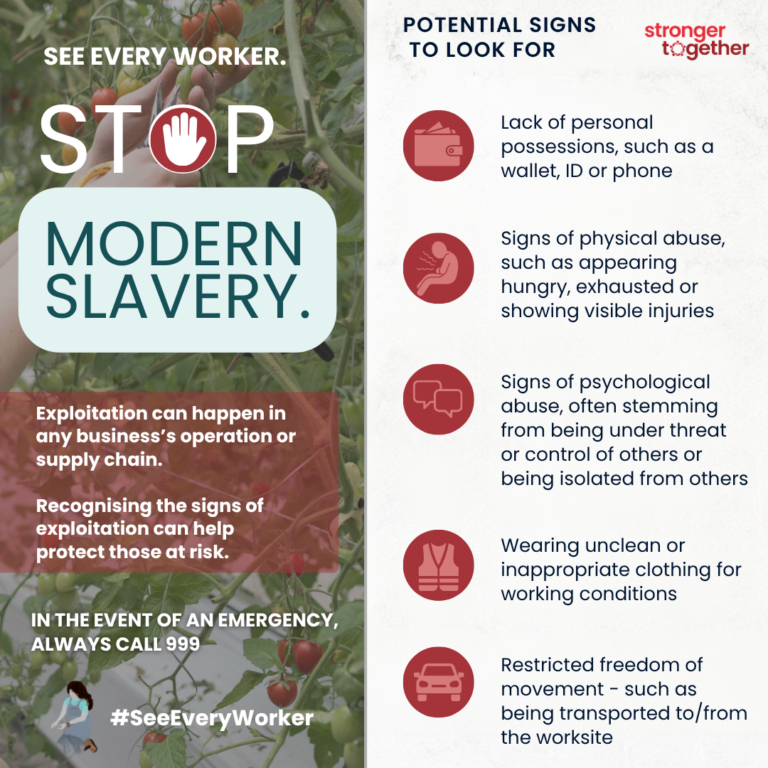
Identifying the Signs of Modern Slavery and Labour Exploitation: What can you do this Anti-Slavery Day?
Whether you work for a food company, a different type of business or any other job, we all have a role to play in eradicating slavery. It is important to learn how to spot the signs of slavery and make a note of the modern slavery helpline number. According to Anti-Slavery International, the signs to look out for are people who:
- “Appear to be under the control of someone else and reluctant to interact with others
- Have few personal belongings, wear the same clothes every day or wear unsuitable clothes for work
- Not be able to move around freely, and they may not have access to personal identification
- Be reluctant to talk to strangers or officials including police officers or health workers
- Appear frightened or withdrawn, or show signs of physical or psychological abuse
- Be dropped off and collected for work always in the same way, especially at unusual times – very early or late at night”
Unseen has also developed a comprehensive booklet to help you understand the signs of slavery and labour exploitation.
And crucially, if you believe you have seen someone who may be being exploited, it’s important to call the Modern Slavery & Exploitation Helpline. The service is free, confidential, open 365 days a year, and available in over 250 languages. Call the Helpline at 08000 121 700 or report concerns online.