
For Human Rights Day 2025, the chair of FNET’s Board, Pins Brown, shares reflections on human rights in the food sector. The theme this year is “everyday essentials”. And Pins shares insights on connecting human rights and food, FNET’s “secret sauce” for human rights collaboration and how we can practically engage with the everyday essentials of human rights.
When my children were in primary school, on International Human Rights Day I used to give school assemblies about my work. Trying to communicate human rights and global supply chains to fidgety 8-year-olds is a challenge. But they say all good comms keep things simple, right? I’d ask kids for examples of unfairness, and they had plenty – fewer chocolate buttons than their siblings. Or not being allowed to go to the toilet during lessons sometimes.
Everyday essentials: core ingredients for humans
So I used to start with a photo of a kitchen cupboard, a bunch of bananas and other things kids can relate to – chocolate, peanut butter, tea and sugar. Everyone can relate to food. And everyone understands how important their daily essentials are. With a few simple visual aids, I’d show that human rights are some everyday essentials of being human. The basic rules that say every person should be safe, treated fairly, and able to live a good life, just because they are human. And they apply to everyone, no matter who or where they are. They should be upheld whether you’re running around a playground, picking apples in Kent, growing tea in Kenya, or collecting Turkish hazelnuts for chocolate spread.

At the Food Network for Ethical Trade, I’m proud that we’re spreading the word about how people in food businesses can practically implement those everyday essential human rights. Across the food sector, this means health & safety, fair pay, access to drinking water and more. And a safe and private toilet for women to pee in when you have to drink more to stay healthy in the higher temperatures you’re working in.
Fidgety kids can relate to that, too.
Don’t miss the UN’s promotional video for International Human Rights Day.
How does FNET work to uphold human rights?
Beyond the everyday essentials, FNET works on more complex topics, too. These include questions such as:
- What do accessible grievance and remedy mechanisms look like?
- How do you bring climate change and human rights together in a way that makes sense?
- If your senior leadership or board aren’t getting it, what can you learn from others who have successfully made the case?
We’ve hosted recent webinars for members in the dairy and fishing sector to show the potential human rights issues, what good practice looks like, where you could begin, and which other members you can learn from.
“Human rights are our compass in turbulent times — guiding and steadying us through uncertainty…We need more solidarity and more human rights to address the current challenges. It is crucial to keep advocating for our fundamental rights,”
Collaborative advantage
Together with a small technical team, members work hard to build a brave, safe pre-competitive space for people to work together. FNET was born from people working at food suppliers who were fed up with duplicating work instead of getting on with addressing human rights issues. This can mean being in a working group meeting, sitting right next to a competitor in ways you wouldn’t elsewhere. FNET’s aims are pre-competitive, and our goal is not just to meet the law but to go beyond it and to use our collaborative advantage to get there.
On days like International Human Rights Day, we know many of our members can reflect on how membership of FNET has helped them to understand and implement improved human rights across their operations and supply chains.
We’re a membership network of human resources, human rights and sustainability practitioners across the food sector in 82 businesses. There’s no dividing line between own operations and supply chains; we cover both areas because human rights apply in both. Our members go from big businesses with big teams to SMEs with a Sustainability or Responsible Procurement team of one, and they really value each other.
This year in particular has seen far too many human rights defenders being targeted, undermined and experiencing legal setbacks and climate challenges. Plenty of people in the sector work hard to support those fighting directly for their rights by addressing those tough issues – rights abuses, low pay, water scarcity, land rights, and modern slavery. And this can impact their own well-being too. Practitioners in the FNET membership really value not just the tools we share, but the solidarity.
FNET’s own essentials to advance responsible business practices and worker rights
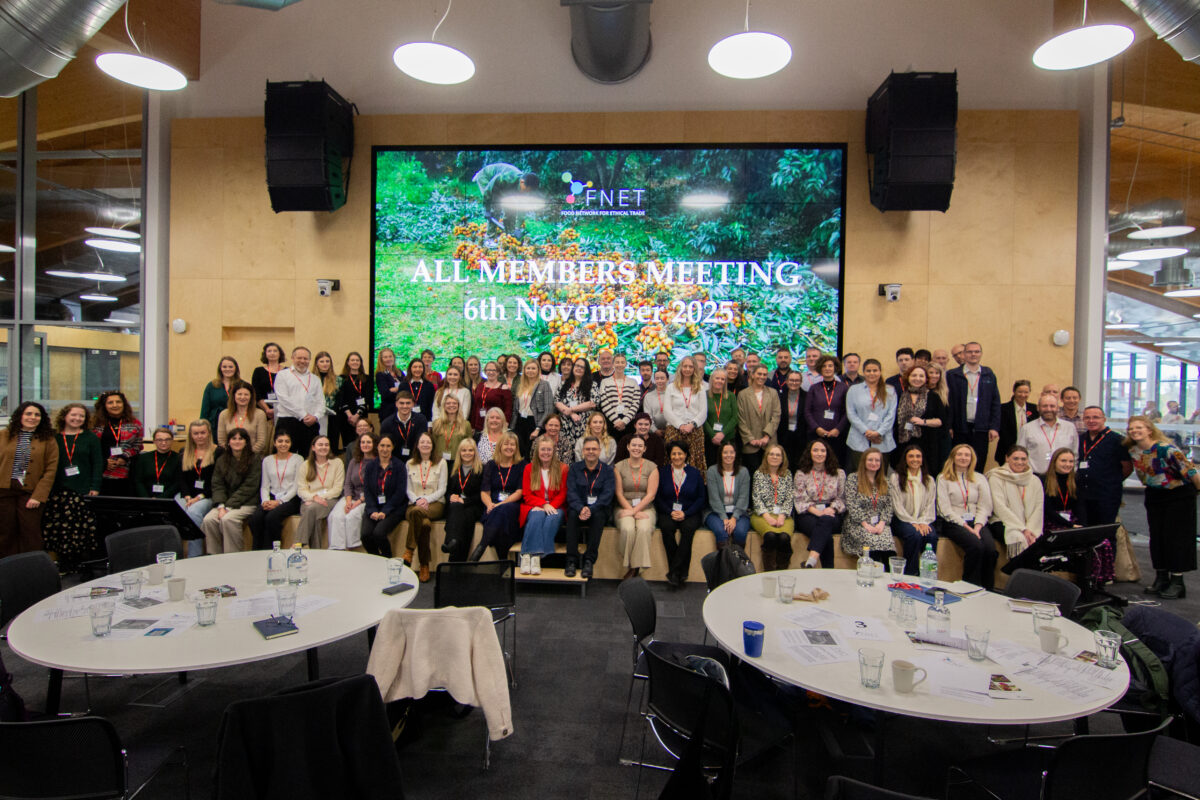
For nearly a decade, FNET has been designing and sharing practical tools to move from commitment to real action for real people on factory floors, in distribution lorries and in heat-stressed fields. Last week we had 61 people in our bi-monthly call, which shared resources and learning from the UN Business and Human Rights Forum last month, and clear, practical information on what’s really happening to CSDDD. And last month, we held our largest-ever all-member meeting with over 120 people in attendance. Find out more in our recap blog.
As a member of FNET, people gain access to interactive tools, such as our risk assessment tool. Members use these tools to understand their own human rights risk issues and to create action plans to address them. Often, we design these tools in a way that members can adapt and use with their own suppliers. And when members provide feedback, these insights inform internal strategy and decisions, such as how to address less visible sectors (raw materials, logistics) or get down to the nitty-gritty at the very start of supply chains.
Get the kettle on and lend us an hour to prioritise human rights
What really matters to us isn’t just producing good guidance with real examples that have improved rights in practice. It’s that people actually take the time to use them rather than feeling overloaded with a plethora of tools. We need businesses to really embed them in their own processes – so, for example, next year we’re starting a new Responsible Procurement Working Group to share more detailed experience on that too.
So this Human Rights Day, let’s ask for an hour of your time. Our eight-year-old selves understood injustice, and so do we. We can start with the everyday essentials and work towards a fairer world for all. If you’re a member, commit to using a tool you haven’t touched before. And if you’re not a member, explore how you can prioritise human rights today. You can take a look at our open resources and carve out some time to see if you can learn from them, use them, or send us your comments on what we could do better.
The food supply ecosystem needs all of us to work together and get on with it.
